
Garage Door Opener Not Working
Most openers that get replaced did not need to be. Before you buy a new unit, there is one test that separates a broken opener from a broken door, and it takes about a minute.
The test that decides everything
Close the door. Pull the emergency release cord — the red handle hanging from the rail — which disconnects the motor. Now lift the door by hand.
- It rises smoothly and stays put around waist height. The door is balanced and the fault is in the opener.
- It fights you, feels enormously heavy, or slams back down. The door is the problem — almost certainly a spring. A new opener would strain against the same fault and fail early.
- It moves in jerks or catches at a point. Rollers, track or alignment. Again the door, not the motor.
Do this only with the door closed. With the opener disconnected the springs alone hold the weight, and if a spring is what broke there is nothing holding it at all.
If the opener really is the fault
Work through these in order — they run cheapest and most likely to least.
- Remote and keypad batteries. If the wall button works and the remote does not, you have already found it.
- Power. Check the outlet with something else, and check the breaker. Ceiling outlets on a garage circuit trip more often than people expect.
- The reset. Unplug for a minute and plug back in. Clears a confused logic board and nothing else.
- The safety sensors. If the door lifts but will not close, this is almost always it — see our guide to a garage door that will not close.
- The drive gear. The classic symptom is a motor that hums and a door that does not move. It is a replaceable plastic gear that wears out on schedule, and it is the single most common reason a repairable opener gets thrown away.
- The trolley carriage. If the motor runs and the chain or belt moves but the door stays still, the carriage that connects them has worn or failed to re-latch after an emergency release. A part, not a new unit.
- The logic board. Intermittent behaviour, unresponsive controls, or a unit that works after a power cycle and then stops. This is where replacement starts to make more sense on an older opener.
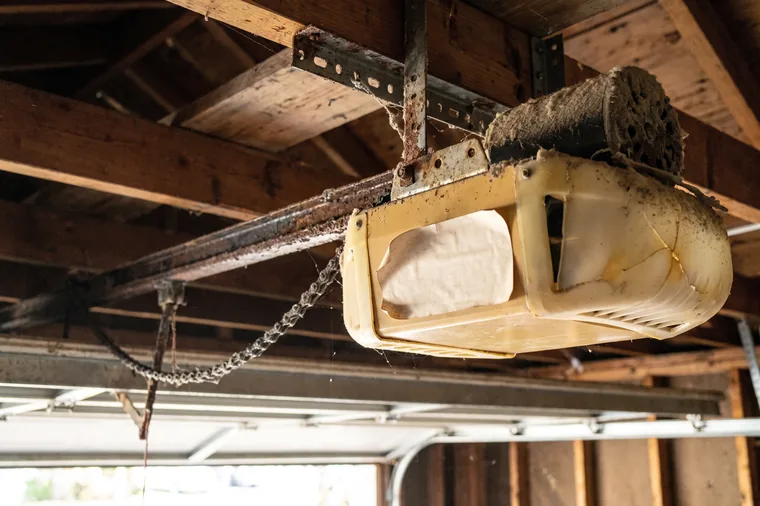
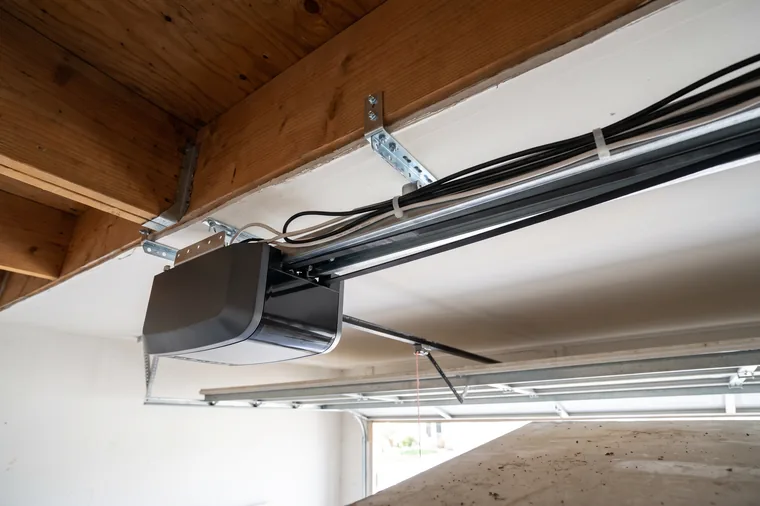
Replacement looks like the pair above, and it is the right answer less often than it gets sold. Everything in the list before it is a part, not a machine.
Repair or replace?
Repair is often the better choice for sensors, remotes, gears, carriages and wiring. Replacement makes sense once the motor or the logic board has gone on an older unit, or when parts are no longer made. We inspect both the opener and the door free, then put the appropriate repair or replacement option in writing.
Remote works at the door but not the driveway
This specific symptom is worth calling out because it gets misdiagnosed constantly. It is not the remote. It is a weakening receiver or a damaged antenna wire in the opener itself — the hanging wire from the motor housing that people cut, coil or tuck away during a renovation. A brand-new programmed remote will behave exactly the same.
After a power outage
If the opener has power but the door will not move, the carriage may not have re-engaged after the emergency release was pulled. Run the door fully closed by hand, then pull the release cord toward the door and operate the opener — it should re-latch. If it will not, the carriage is worn and needs replacing. It is a short visit.
Common Questions
Why did my garage door opener just stop working?
In rough order of frequency: the safety sensors are out of alignment, the drive gear inside the unit has stripped, a remote or keypad has died, or the door itself has stiffened to the point the motor cannot move it. Only one of those four is a broken opener. Before replacing anything, pull the emergency release and lift the door by hand — if it fights you, the door is the fault and a new opener would inherit the same problem.
Does unplugging the garage door opener reset it?
It resets the logic board, which is genuinely worth thirty seconds before calling anyone. Unplug it, wait a minute, plug it back in. It will not fix a stripped drive gear, a misaligned sensor, a broken spring or a worn carriage. If unplugging brings the opener back and it fails again within days, the reset is hiding a fault rather than fixing one.
Are garage door openers worth repairing?
Usually. Sensors, remotes, gears, carriages and wiring are individual repairable parts. Replacement is the right call when the motor or logic board fails on an older unit, or when replacement parts are no longer manufactured. We inspect it free and quote the appropriate option in writing.
What is the average life of a garage door opener?
Ten to fifteen years is typical, and cycle count moves it a long way in both directions. The drive gear and the trolley carriage are usually what age out first, and both are individual parts rather than reasons to replace the machine. Past fifteen years, once the logic board goes, replacement is generally the better spend.
Do garage door remotes go bad?
The batteries constantly, the remotes themselves rarely. The more interesting failure is the receiver in the opener: the classic symptom is a remote that works standing at the door but not from the driveway, which is a weakening receiver or a damaged antenna wire rather than a remote problem. If a brand-new programmed remote behaves identically, the fault is in the opener.
Want It Looked At Today?
We are based in Jersey City and we answer the phone 24 hours a day.